
A one-person studio can lose significant time moving the same information between proposals, email, files, invoices, reports, and production tools. Off-the-shelf services solve individual tasks, but their seams become the operator's daily workload.
The goal was to reduce those seams while preserving a direct, personal client experience.
Connected around the life of the work
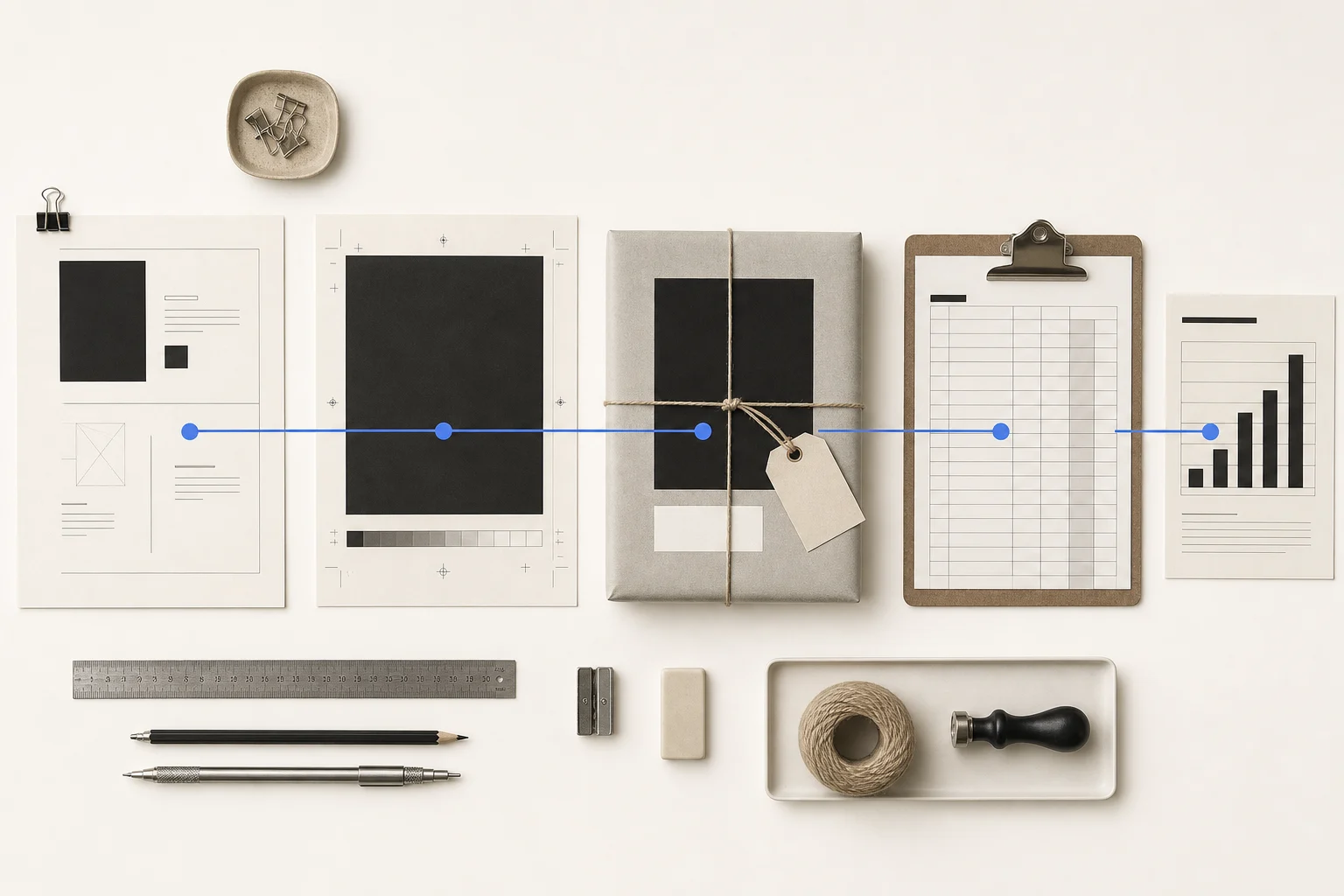
The system connects the major stages of a client engagement:
- Interactive proposals and section-level feedback
- Secure client deliveries with previews, selections, downloads, and history
- Invoicing, payments, expenses, mileage, and tax reporting
- Analytics and client reporting
- Repeatable production pipelines for print, social, video, signs, and other deliverables
These are not separate portfolio demos. They are tools used to run the studio and deliver real client work.
The delivery is part of the product
A client receives a focused review page instead of a folder and a long explanation. Deliveries can group related formats, provide ready-to-use captions, preview assets at useful sizes, collect lightweight selections, preserve delivery notes, and offer individual or complete downloads.
The interface is deliberately quieter than the administrative system around it. The client sees the work, the context, and the next useful action.
Build the repeatable part, keep judgment human
Automation handles repeated production, naming, rendering, storage, and delivery rules. Drew still owns the choices that require context: what the client needs, what the work should say, what quality means, and when an exception is justified.
That division keeps the studio efficient without making the client experience feel automated or generic.
Operational context stays connected to the work
Client records, active engagements, delivery state, feedback, and next actions belong in the same operating picture. The studio can see what is in progress, what is waiting on a response, and what has been delivered without reconstructing the story from separate tools.
The system is designed to support judgment and follow-through, not turn the studio into a dashboard-watching exercise.
The screens use the same production components and visual system that run the studio, but every visible client, amount, activity count, delivery, selection, and invoice is synthetic. Together they now trace the work from internal coordination into recipient review without exposing private records, access tokens, or analytics.